RTA Vehicle Test Checklist in Dubai
Preparing for an RTA vehicle test in Dubai requires more than simply taking your car to an inspection centre. A proper pre-inspection check can help you identify mechanical, electrical and safety issues before the official vehicle inspection.
A failed RTA vehicle test can mean additional repairs, another inspection, extra time and unnecessary inconvenience. Preparing your vehicle in advance can help you identify common problems and improve your chances of completing the inspection successfully.
What Is an RTA Vehicle Test?
An RTA vehicle test is a technical inspection used to check the roadworthiness and condition of applicable vehicles in Dubai. Vehicle testing can be required for services such as registration, registration renewal and certain vehicle transactions.
The inspection is carried out through approved vehicle inspection centres. The exact requirements can vary depending on the vehicle, inspection type and transaction.
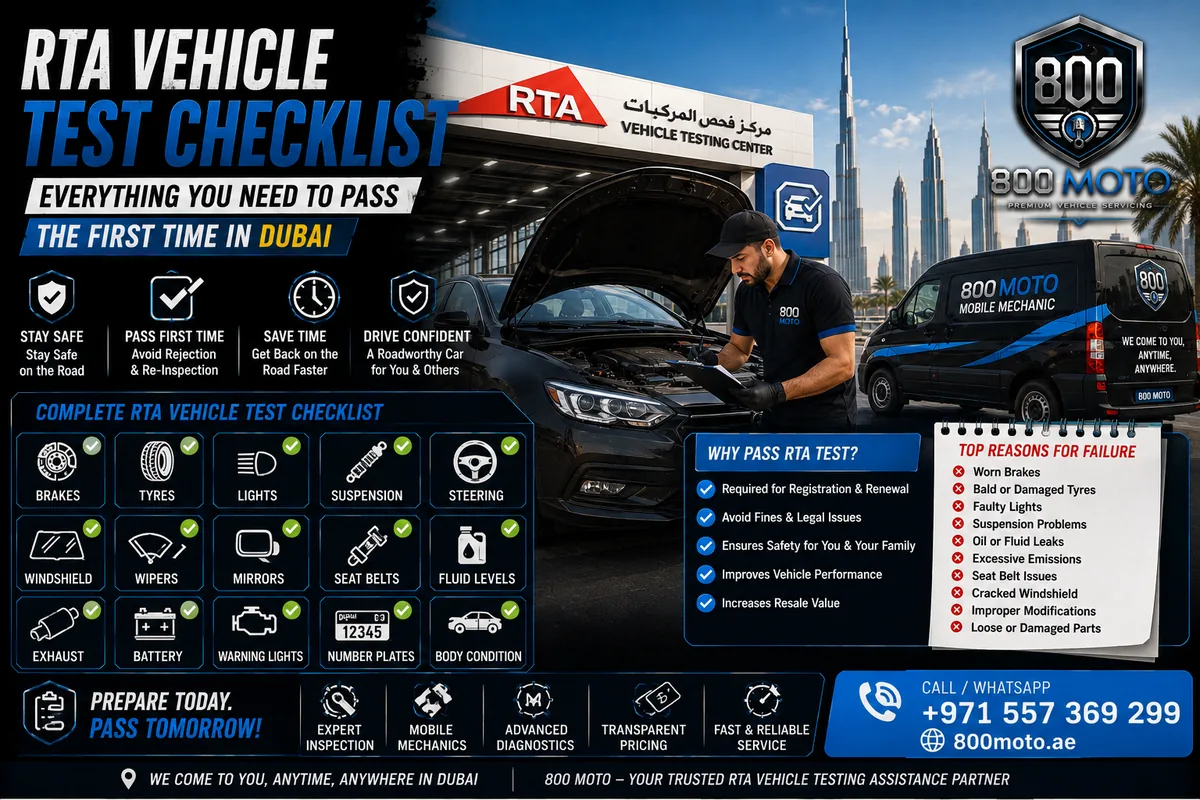
Complete RTA Vehicle Test Checklist
Before taking your vehicle for an RTA inspection, check the following important areas.
1. Check Your Brakes
Brakes are one of the most important safety systems in your vehicle. Worn brake pads, damaged brake discs, brake fluid problems or uneven braking can create safety concerns.
- Check brake pad condition.
- Inspect brake discs for excessive wear.
- Check brake fluid level.
- Make sure the brake pedal feels normal.
- Check for unusual grinding or squealing sounds.
- Make sure the vehicle does not pull strongly to one side while braking.
2. Inspect Your Tyres
Tyres are extremely important for vehicle safety in Dubai because high temperatures and hot road surfaces can accelerate tyre wear.
- Check tyre tread condition.
- Look for cracks and cuts.
- Check for bulges or damaged sidewalls.
- Check for uneven tyre wear.
- Check tyre pressure.
- Make sure the tyres are suitable for the vehicle.
3. Test All Vehicle Lights
A complete lighting check can help you identify simple problems before the RTA vehicle inspection.
- Headlights.
- High beam lights.
- Brake lights.
- Turn indicators.
- Hazard lights.
- Reverse lights.
- Rear lights.
- Number plate lights where applicable.
4. Check Suspension and Steering
Suspension and steering components affect vehicle stability, handling and braking. Worn components can create unusual noises, vibration or poor handling.
- Check shock absorbers.
- Check suspension bushes.
- Inspect ball joints.
- Check tie rods.
- Look for unusual knocking sounds.
- Check for excessive vehicle bouncing.
- Check steering vibration or excessive play.
5. Check the Windshield and Windows
Inspect the windshield for significant cracks, chips or damage that can affect visibility. Make sure the windows operate properly and that the driver view is not unnecessarily obstructed.
6. Check Windshield Wipers and Washer System
Worn or damaged wiper blades can reduce visibility during rain and cleaning. Check the wipers and windshield washer system before your inspection.
- Inspect wiper blades.
- Replace damaged or worn blades.
- Check windshield washer fluid.
- Make sure washer spray works correctly.
7. Check Mirrors and Vehicle Body
Inspect the rear view mirror and side mirrors for damage. Also check the exterior body for loose components, sharp edges or other visible damage that could create a safety concern.
8. Check Seat Belts
Seat belts are important safety equipment and should operate correctly.
- Check front seat belts.
- Check rear seat belts.
- Make sure seat belts lock correctly.
- Check for visible damage or excessive wear.
9. Check Engine Oil and Other Fluids
Inspect important fluid levels and look underneath the vehicle for signs of leakage.
- Engine oil.
- Engine coolant.
- Brake fluid.
- Power steering fluid where applicable.
- Windshield washer fluid.
If you notice an active oil leak, coolant leak or another fluid leak, have the vehicle professionally inspected before attending the RTA test.
10. Check the Exhaust and Emissions System
Exhaust problems can indicate underlying engine or emission system issues. Excessive smoke, unusual exhaust noise or unusual exhaust smells should be checked by a qualified mechanic before the inspection.
11. Check the Car Battery and Electrical System
A weak battery or electrical fault can cause starting problems and may indicate a larger electrical or charging system issue.
- Check battery condition.
- Check battery terminals.
- Check for corrosion.
- Check the charging system.
- Check for repeated battery discharge.
12. Check Dashboard Warning Lights
Do not ignore warning lights before an RTA vehicle inspection. Warning lights related to the engine, ABS, airbag, battery or braking system should be professionally diagnosed when they remain illuminated.
13. Check Number Plates
Make sure your vehicle number plates are correctly fitted, visible and secure. Damaged or improperly fitted plates should be checked before attending the inspection.
14. Check Aftermarket Modifications
Non-standard vehicle modifications can create inspection concerns depending on the type of modification and applicable requirements.
If your vehicle has aftermarket lights, exhaust modifications, suspension modifications, body modifications or other major alterations, have the vehicle checked for compliance before the RTA inspection.
15. Check Previous Mechanical Problems
If your vehicle recently experienced overheating, brake problems, steering problems, suspension noise, engine problems or repeated dashboard warning lights, have the issue inspected before taking the vehicle for testing.
Common Reasons for RTA Vehicle Test Failure in Dubai
- Worn brake pads or damaged brake components.
- Unsafe or excessively worn tyres.
- Faulty headlights or exterior lights.
- Suspension problems.
- Steering problems.
- Exhaust or emissions problems.
- Fluid leaks.
- Damaged windshield.
- Faulty seat belts.
- Unsafe body components.
- Electrical problems.
- Vehicle modification concerns.
How to Prepare Your Car for an RTA Test
The best way to prepare for an RTA vehicle test is to inspect your car several days before your appointment. This gives you enough time to identify problems and complete any required repairs.
A professional pre-inspection check can help identify brake problems, tyre wear, lighting faults, suspension issues, fluid leaks, battery problems and other mechanical concerns.
What Happens If Your Car Fails the RTA Test?
If your vehicle does not pass the inspection, the reported issues should be repaired before returning for the applicable reinspection.
Instead of immediately booking another inspection, understand the reason for the failure and repair the underlying problem. A professional vehicle inspection before returning can help reduce the possibility of repeated issues.
Can 800 MOTO Help With RTA Vehicle Testing Assistance?
Yes. 800 MOTO provides RTA vehicle testing assistance and vehicle inspection preparation services across Dubai.
Our mobile mechanics can come to your location and inspect important vehicle components including brakes, tyres, battery, engine, electrical systems, fluids, suspension and other mechanical components before your RTA inspection.
RTA Vehicle Test Preparation Checklist
- Check brakes.
- Inspect tyres.
- Test all lights.
- Inspect suspension.
- Check steering components.
- Inspect windshield.
- Check mirrors.
- Test windshield wipers.
- Check seat belts.
- Check engine oil and fluids.
- Look for fluid leaks.
- Check exhaust and emissions symptoms.
- Check battery condition.
- Check dashboard warning lights.
- Review aftermarket modifications.
- Confirm the latest RTA inspection requirements.
How to Improve Your Chances of Passing the RTA Test First Time
Preparing your vehicle before the inspection is one of the best ways to reduce avoidable problems. Check your brakes, tyres, lights, suspension, steering, windshield, fluids, battery and warning lights before visiting the inspection centre.
If your car already has a mechanical problem, do not wait until the day of the RTA test. Have the vehicle inspected and repaired in advance so you have enough time to address any issues.
Need RTA Vehicle Testing Assistance in Dubai?
If you are preparing for an RTA vehicle test in Dubai, 800 MOTO can help you prepare your vehicle before the inspection.
Our mobile mechanics provide vehicle inspection preparation, mechanical checks, battery services, brake services, tyre services, engine diagnostics and RTA vehicle testing assistance at your location across Dubai.
Contact 800 MOTO today for professional mobile vehicle inspection and RTA testing assistance in Dubai.